
.jpg)
We’re into August, and I think we’ve reached a point in the Squamish real estate market where sellers need to have a very realistic and very honest conversation about price.
This is not a panic article. I’m not predicting that Squamish real estate is suddenly going to fall 10%, and I’m certainly not suggesting everyone needs to rush out and sell.
But if you are trying to sell your property right now, the market is telling us something pretty clearly:
Buyers are no longer willing to automatically step up and pay yesterday’s prices.
And sellers who recognize that early are going to put themselves in a much better position than sellers who spend the next three or four months chasing the market down.
The Data Is Starting to Tell a Story
I’ve talked before about the probability index I use when looking at the direction of the Squamish market. The most recent reading suggested roughly a 67–70% probability of downward pressure on prices.
But I'm also seeing it in the underlying market data.
Days on market are increasing.
What's particularly interesting is how they're increasing. We're not seeing a sudden spike followed by a drop. We're seeing a gradual increase as properties stay on the market longer and longer.
Why?
Part of the problem is that sellers naturally remember what their property might have been worth six months ago. They see another home listed for a certain price and think:
"Well, if they're asking that, mine must be worth this."
But an asking price isn't a market value.
What somebody lists their home for doesn't matter nearly as much as what comparable properties are actually selling for.
And right now, sale prices have been coming down across the different segments of the Squamish market, including detached homes, townhouses and apartments.
One Number I'm Watching Closely
Another important indicator is the percentage of original asking price that sellers ultimately receive.
Historically, receiving somewhere around 98–99% of asking price has been fairly normal in our market.
Recently, that number has dropped considerably. Our latest reading was approximately 96.3%.
That may not sound dramatic, but from a market perspective it's significant.
When properties consistently sell several percentage points below asking price, those sales become the comparables for the next group of sellers.
Then those lower sales become the new benchmark.
That's how downward pressure can gradually work its way through a real estate market.
We saw the sale-to-original-price relationship reach approximately 100% in February 2026, and we saw something similar around June 2024 before the market subsequently softened.
I'll be watching this number particularly closely through August because I think there's a reasonable possibility it moves lower again.
Stop Comparing Your Home to Other Asking Prices
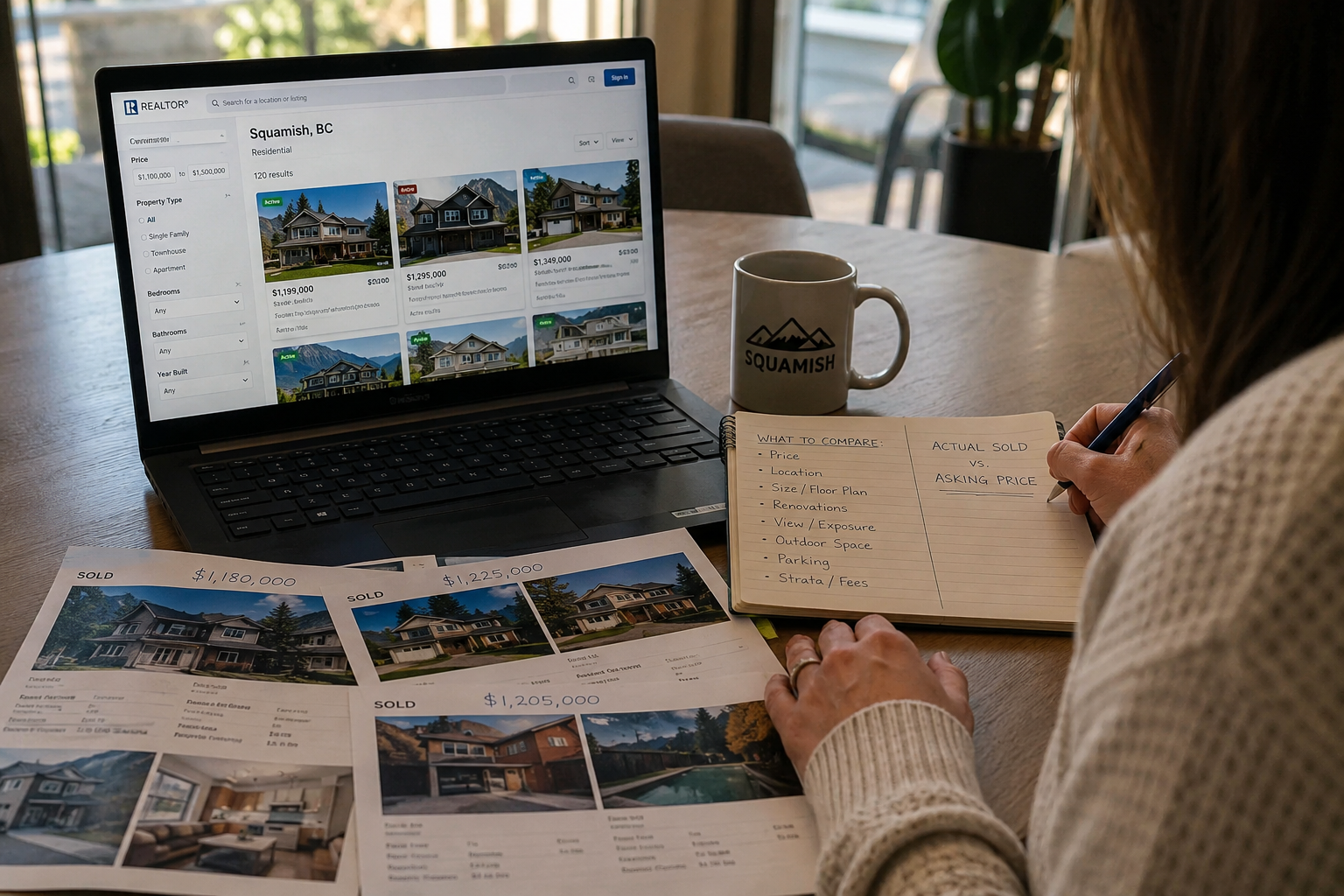
If you're selling right now, one of the most important things you can do is sit down with your Realtor and really study your competition.
And I mean really study it.
I'd probably start by looking at everything approximately $100,000 below and $100,000 above where you think your property should sell.
Don't just glance at the MLS sheet.
Look at the photos.
Look at the renovations.
Look at the floor plan.
Look at the location.
Look at the view.
If it's a townhouse or condo, where is it positioned within the complex? Is it an end unit? What's the exposure? What's outside the windows? What's the parking situation? Does it have outdoor space?
Then compare those properties to the ones that have actually sold.
That's where the real information is.
Now Pretend You Don't Own Your Home
This is probably one of the hardest exercises for a seller, but I think it's incredibly valuable.
Pretend you're the buyer.
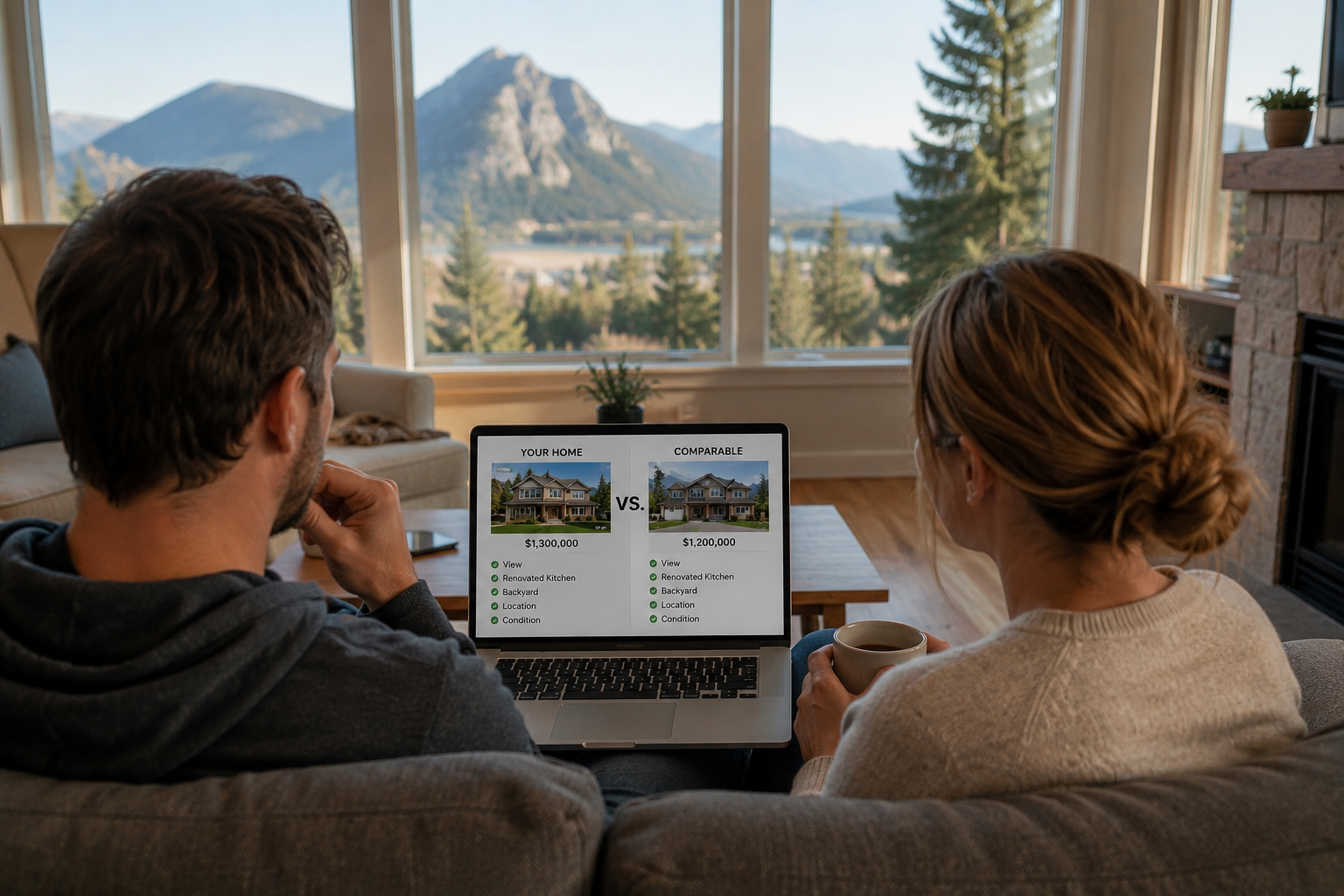
Take your property and the best comparable property available and put them side by side.
If you were coming up from Vancouver to buy a home in Squamish, which one would you choose?
What would you like better about the other property?
What would you like better about yours?
Now imagine you're downsizing. Does your answer change?
Imagine you're a young family upsizing into your next home. Does it change again?
Try to remove your emotional connection to the property and look at it the way those buyers will.
Because ultimately they're the ones determining the value.
You might genuinely believe your home should be worth $1.3 million. But if buyers consistently choose a comparable property at $1.2 million, the market is giving you some pretty important information.
Don't Chase a Falling Market
This is probably the biggest message I want sellers to take away from this.
In a rising market, being slightly overpriced can sometimes be forgiven because the market eventually catches up with you.
In a softening market, the opposite can happen.
You list too high.
You don't get the activity you expected.
You wait.
Then you reduce the price.
But during that time, another comparable property sells lower.
So you reduce again.
And suddenly you're chasing the market instead of getting ahead of it.
That can become particularly important as we move toward fall and winter.
There's a seasonal component to the Squamish market. Buyers don't disappear in the winter, but activity can slow, and if your property has already accumulated significant days on market, you're potentially entering that quieter period from a weaker position.
That's why getting the price right at the beginning matters so much right now.
Spend the Time Before You Choose the Price
If you're thinking about selling, don't settle for a five-minute conversation about what your home is worth.
Spend an hour.
Maybe spend two.
Go through the competing listings and recent sales property by property and understand exactly where your home fits.
At Team Hudson Squamish, we're happy to spend that time with our sellers because I think pricing correctly from the beginning is one of the most important things we can do for a client in this type of market.
There will still be homes that sell quickly.
There will still be properties that attract multiple interested buyers.
And there will absolutely still be good sales.
But increasingly, those successful sellers are going to be the ones who understand where the market is today rather than where it was six months ago.
If you're selling in Squamish right now, don't panic.
Just be realistic, study the competition, listen to what the buyers are telling you, and put yourself in a position to succeed.
 The data relating to real estate on this website comes in part from the MLS® Reciprocity program of either the Greater Vancouver REALTORS® (GVR), the Fraser Valley Real Estate Board (FVREB) or the Chilliwack and District Real Estate Board (CADREB). Real estate listings held by participating real estate firms are marked with the MLS® logo and detailed information about the listing includes the name of the listing agent. This representation is based in whole or part on data generated by either the GVR, the FVREB or the CADREB which assumes no responsibility for its accuracy. The materials contained on this page may not be reproduced without the express written consent of either the GVR, the FVREB or the CADREB.
Comments:
Post Your Comment: