

I was asked an interesting question the other day: what does it actually cost to live in Squamish beyond the price of your home? It's a good question because when people are thinking about moving here, they naturally spend most of their time looking at real estate prices. They figure out what a house costs, what a townhouse costs, what their mortgage payment is going to be and whether they can afford to make the move. But there's another part of the calculation, which is what your life is actually going to cost once you get here.
There are certainly some things that, in my experience, can be a little more expensive in Squamish. Gas can sometimes cost a little more than it does in places such as Langley or even North Vancouver, and groceries can sometimes feel a little more expensive as well. There are probably some services where you're going to pay a little more simply because we're a smaller community and don't have the same number of businesses competing for your dollar. But once you get past the price of the home itself, I don't think the difference in the overall cost of living is necessarily as significant as people expect. In fact, depending on how you live, I think moving to Squamish can change your spending in ways people don't initially consider.
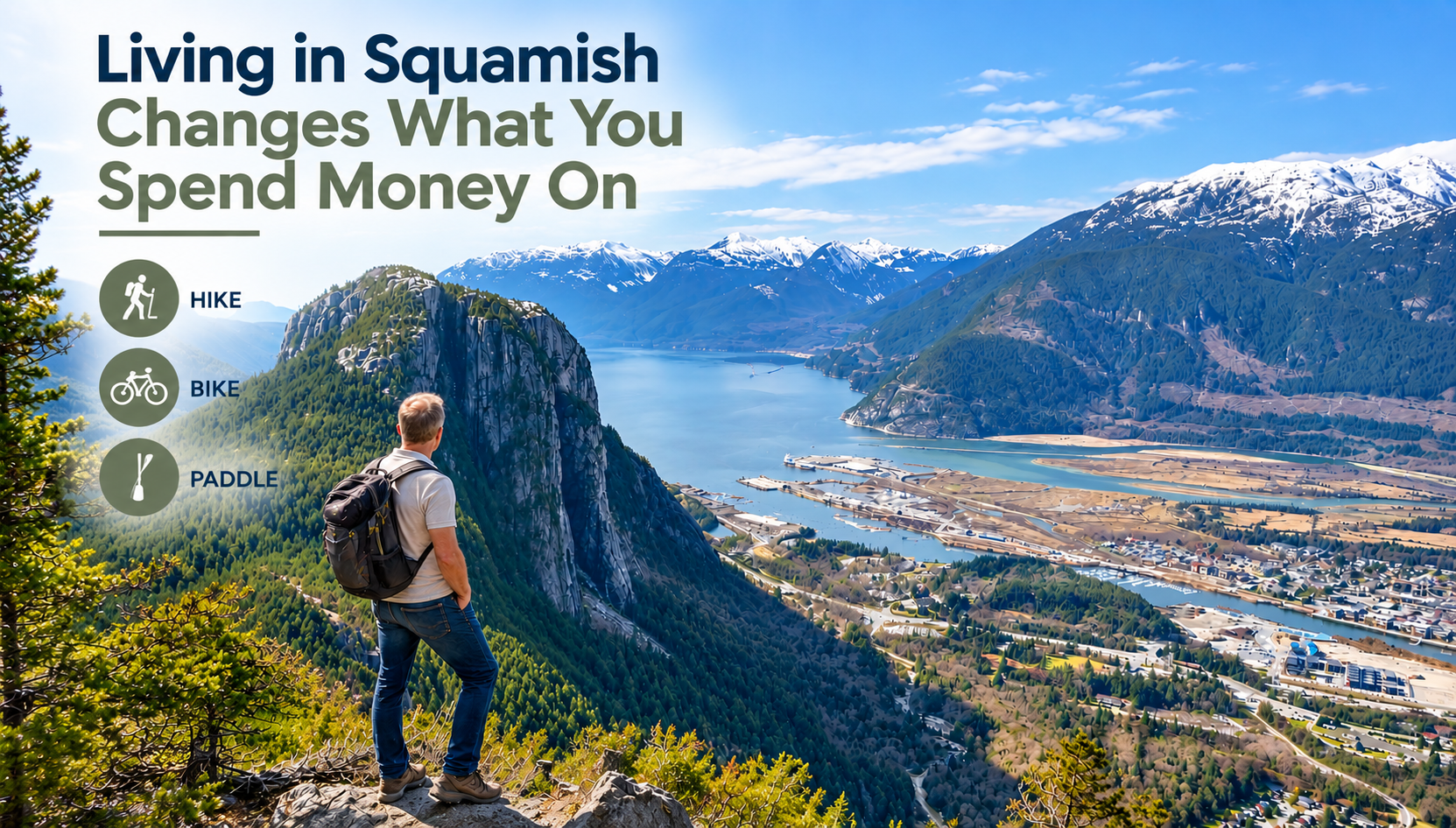
Living in Squamish Changes What You Spend Money On
This is the part of the conversation that I think gets overlooked. When people compare the cost of living in two communities, they'll often compare the price of gas, groceries, restaurants and other individual expenses, but they don't necessarily think about how moving somewhere changes their behaviour. If you move from Vancouver to Squamish, you're probably not going to live exactly the same life you lived in Vancouver, because one of the main reasons people move here is that they want a different lifestyle.
Somebody living in Vancouver might be an avid mountain biker, for example, but there are also a huge number of other things competing for their time and money. There are shows, movies, restaurants, shopping and all of the other things that come with living in a major city. Squamish has restaurants, breweries, shops, cultural events and plenty of things happening in the community, but it doesn't have the same amount of retail and entertainment as Vancouver. What it does have is incredibly easy access to the outdoors, and that naturally changes how many people spend their free time.
If it's Saturday morning and you can get on your mountain bike, go hiking, head to the lake, go paddleboarding or simply get outside without turning it into a major expedition, that's probably what you're going to do. Tourism Squamish describes outdoor recreation here as year-round, and the mountain-bike network alone includes more than 300 kilometres of trails. Hiking ranges from local trails to extensive backcountry and provincial-park access. That's not just something tourists come here to experience. For people who live here, it's part of everyday life.
A Lot of the Squamish Lifestyle Is Relatively Inexpensive Once You Have the Gear
Obviously, I'm not going to pretend mountain biking is free. Anybody who's owned a good mountain bike knows that's not true. The same applies to skis, paddleboards, climbing equipment and all of the other toys people accumulate when they live here. There is an initial cost, there is maintenance and sometimes there are memberships, passes or other expenses associated with the activity.
But the interesting thing is that many of the people moving to Squamish already own that equipment. They aren't moving here and suddenly deciding they need to become mountain bikers. Quite often they're moving here because they're already mountain bikers, climbers, skiers, hikers, runners or paddlers and they want easier access to the activities they already love.
Once you've made that capital purchase, the cost of actually going out and using a lot of that equipment can be relatively small. Going for a hike doesn't require buying a ticket every time you leave the house. A bike ride doesn't require paying admission every Saturday morning. If you've already got a paddleboard, getting out on the water doesn't necessarily mean spending a lot of money. There can certainly be costs attached to these activities, but the basic point is that the recreation people move here to enjoy can be extraordinarily accessible. Tourism Squamish itself describes hiking as requiring little more than appropriate footwear for many outings and highlights the extensive network of mountains, forests, lakes and trails around the community.
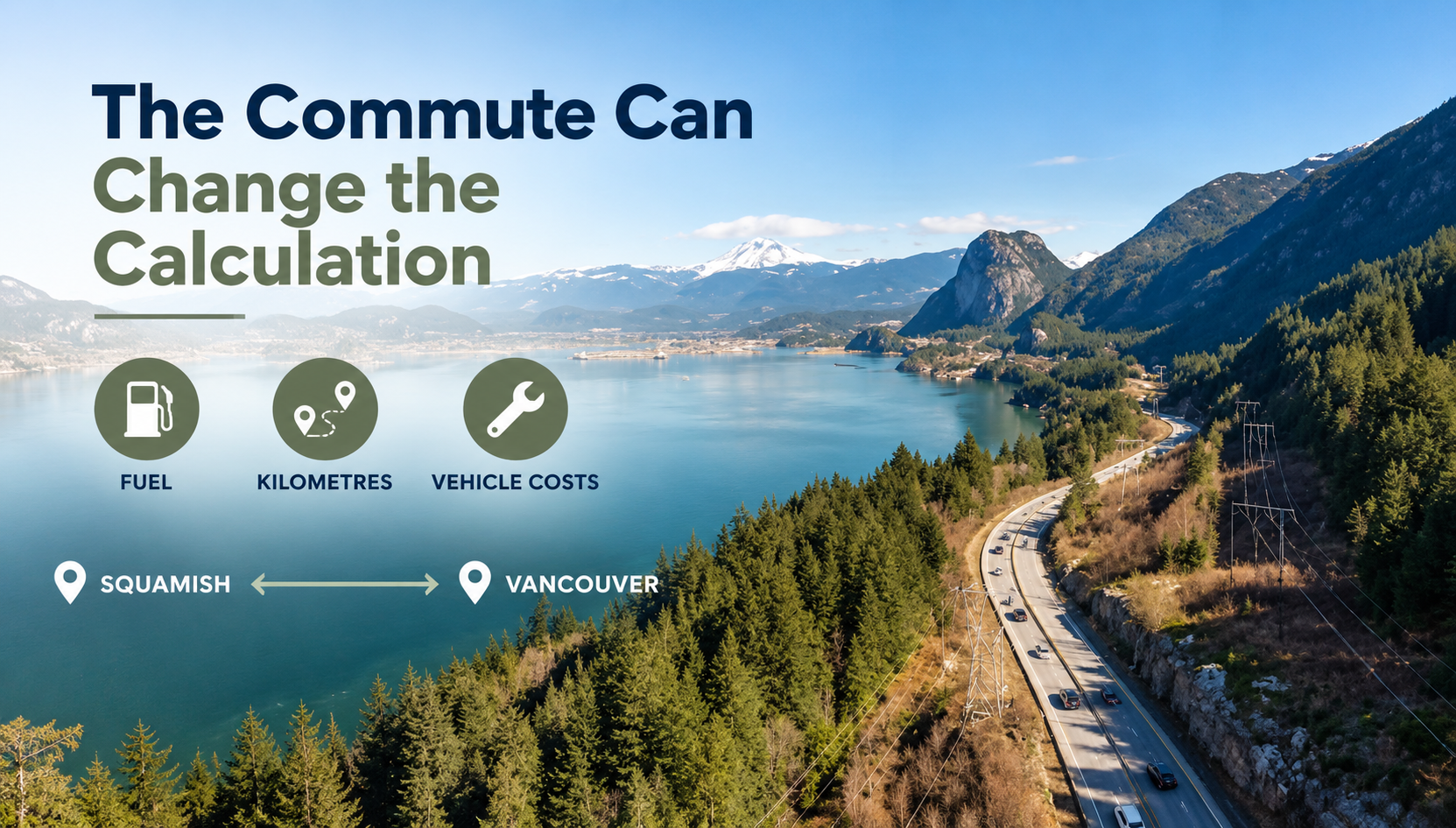
The Commute Can Change the Calculation
There is one obvious exception when we're talking about the cost of living in Squamish, and that's somebody who is commuting regularly to Vancouver. If you're driving the Sea to Sky Highway back and forth several times a week, you're going to use more fuel, put more kilometres on your vehicle and have additional maintenance and depreciation associated with that driving. That's a real expense and it needs to be included when you're deciding whether moving here makes financial sense.
That's why I think the cost calculation is different for somebody who works locally, somebody who works remotely and somebody who needs to be in Vancouver five days a week. Two people can buy identical homes in Squamish and have very different monthly expenses simply because of how they work and how often they need to travel. There are alternatives to driving for some trips—Squamish has local transit, walking and cycling options as well as regional shuttle services—but whether those alternatives are practical depends entirely on the person's circumstances.
So if somebody tells me they're moving to Squamish to save money but they're going to drive into Downtown Vancouver every single day, I'd want them to calculate that properly. On the other hand, if they're working remotely three or four days a week and spending their weekends riding from their house or hiking nearby, that's a completely different lifestyle and a completely different cost structure.
Your Neighbourhood and Property Can Affect Your Costs Too
Where you choose to live in Squamish can also influence how much you spend. Someone living Downtown may be able to walk or bike to a lot of the things they use regularly. Somebody living in another neighbourhood may be more dependent on a vehicle. A condo has different ongoing expenses from a townhouse, and a detached house brings a completely different set of maintenance responsibilities.
That's why I don't think there's one number that answers the question, “How much does it cost to live in Squamish?” Your property, your neighbourhood, your job, your hobbies and your lifestyle all matter. If you're trying to understand whether you can afford the move, you need to look beyond the mortgage payment and think about how you're actually going to live once you get here.
You May Spend Less Simply Because There's Less Temptation to Spend
There's another part of this that is difficult to put into a spreadsheet. Squamish simply doesn't have the same amount of retail, dining and entertainment as Vancouver. Some people will see that as a disadvantage, and if going to major shows, shopping regularly or having an enormous choice of restaurants is an important part of your life, then it is something you need to think about before moving here.
But I also think the opposite can happen. If those things aren't immediately available every night of the week, you're less likely to spend money on them simply because they're there. Instead, maybe you finish work and go for a bike ride. Maybe you take the dog for a walk along the river. Maybe on Saturday you go hiking instead of going shopping. That doesn't mean nobody in Squamish spends money on restaurants, bikes, skis or outdoor equipment—we certainly do. It means your discretionary spending can shift toward a different type of lifestyle.
And Vancouver isn't far away. If there's a particular show you want to see, something you need to buy or a restaurant you want to visit, you can still go. You just tend to make a decision to go rather than having all of those spending opportunities immediately around you every day.
What Is the Real Price You Pay for Living in Squamish?
This is where I might answer the original question a little differently. Yes, you may pay a little more for certain things. In my experience, gas and groceries can sometimes be more expensive, and if you're commuting regularly, transportation can become a meaningful additional expense. There may also be individual services that cost more because Squamish is a smaller market.
But what do you get in return? You get an environment where being outside is extraordinarily easy. You get a community where hiking, biking, paddling, running, climbing and simply being in nature can become part of an ordinary Tuesday rather than something you have to plan for the weekend. Squamish's official tourism information describes the community's outdoor activities as year-round and highlights mountains, forests, ocean, rivers and lakes as part of that recreational environment.
For me, that's where the value of living here becomes difficult to measure. If you spend more time outside, if you're more active, if you feel more freedom in your day and if you're living the lifestyle you actually wanted when you moved here, what's that worth? I would argue that for a lot of people, it's worth considerably more than the small differences they may see in the price of gas or groceries.
Does It Actually Cost More to Live in Squamish?
I wouldn't make a blanket statement that everybody will save money by moving to Squamish, because that's going to depend on the person. Someone commuting every day, maintaining multiple vehicles and owning a detached home is going to have a very different cost structure from somebody working remotely in a Downtown condo and riding their bike most days.
But I also wouldn't assume that moving to Squamish automatically means your everyday life is going to cost more. Once you get past the cost of the property, many of the expenses are similar to what you'd expect elsewhere in the Lower Mainland, while your discretionary spending may change considerably because of the lifestyle you've chosen.
That's really the question I'd encourage someone to ask before moving here. Don't just compare the price of a litre of gas or a bag of groceries. Ask yourself what your life is going to look like. How often will you commute? What will you do on weekends? What do you currently spend money on for entertainment? What activities do you already own the equipment for? And what will you actually do with your free time once the mountains, trails, rivers and ocean are right outside your door?
Because the biggest financial change that comes with moving to Squamish may not be that everything suddenly costs more or less. It may simply be that you start spending your money—and your time—very differently.
 The data relating to real estate on this website comes in part from the MLS® Reciprocity program of either the Greater Vancouver REALTORS® (GVR), the Fraser Valley Real Estate Board (FVREB) or the Chilliwack and District Real Estate Board (CADREB). Real estate listings held by participating real estate firms are marked with the MLS® logo and detailed information about the listing includes the name of the listing agent. This representation is based in whole or part on data generated by either the GVR, the FVREB or the CADREB which assumes no responsibility for its accuracy. The materials contained on this page may not be reproduced without the express written consent of either the GVR, the FVREB or the CADREB.
Comments:
Post Your Comment: