

What do you give up when you move from Vancouver to Squamish?
My immediate response is:
Absolutely nothing.
Well... almost nothing.
I've lived in Squamish for about 25 years, and if you'd asked me this question ten or fifteen years ago, I probably would have given you a very different answer.
Back then, there were some genuine trade-offs.
There weren't as many good restaurants. There were some coffee shops, but nothing like the selection we have now. Grocery and shopping options were more limited. There weren't as many amenities generally.
Living in Squamish really did mean accepting that certain things were going to require a trip to Vancouver.
That's changed substantially.
Squamish isn't Vancouver—and I don't think the people moving here want it to become Vancouver—but the gap in everyday amenities has narrowed considerably.
And that's why I find the question a little funny.
If you're seriously considering leaving Vancouver for Squamish, chances are the things you're supposedly “giving up” are some of the things you want to get away from in the first place.
Why Are You Considering Squamish?
This is where I'd start.
If you love everything about living in the middle of Vancouver, use the city's amenities constantly, want major retail and entertainment on your doorstep, and don't particularly care about mountains, trails or having a smaller-community lifestyle, I'm not sure why you'd move to Squamish.
And that's perfectly fine.
Squamish isn't for everybody.
But most of the people I meet who are seriously considering the move are already looking for something different.
They're tired of traffic.
They're tired of density.
They want more access to nature.
They want a different pace.
They want to know their neighbours.
They want their kids growing up in a smaller community.
They want to finish work and go for a mountain-bike ride, hike, run, paddle or walk without making a major expedition out of it.
So are you giving up Vancouver?
Yes.
But that may be exactly the objective.
Squamish Has Changed Enormously
One of the biggest differences today is simply how much more is available here.
There are restaurants throughout town.
There are independent cafés and bakeries.
There are breweries and other local businesses.
There are grocery options, everyday services, recreation facilities and shops.
There's an arts community.
There are events.
There are sports clubs and recreational groups.
There are places to meet people and communities built around all sorts of different interests.
You're not moving into the middle of nowhere.
You're moving into a smaller town that has become substantially more complete than it was when I arrived.
Food and Coffee Aren't Much of a Sacrifice Anymore
This is one area where I've really noticed the change.
Years ago, if somebody moving from Vancouver was really into restaurants and coffee, I could understand them thinking they were giving something up.
Today, Squamish has developed a legitimate food and coffee scene.
We don't have the sheer number of restaurants that Vancouver has. Obviously not. We're a much smaller community.
But the quality and variety have changed dramatically.
There are places for a good dinner.
There are cafés all over town.
There are bakeries.
There are breweries.
There are quick local places.
There are higher-end dining options.
And because it's a smaller community, these places often become part of your routine.
You don't necessarily have 500 choices.
But how many restaurants do you actually need on a Tuesday night?
You Still Have Access to Vancouver
This is another reason I don't really think of the move as “giving things up.”
Vancouver didn't disappear.
It's still down the highway.
Maybe you want to go to a major concert.
Maybe there's a particular theatre production.
Maybe you want a serious day of retail shopping.
Maybe you need something at Costco.
Maybe there's a particular restaurant you still love.
You can go.
I'm deliberately not going to tell you Vancouver is always 45 or 55 minutes away, because anybody who has driven the Sea to Sky Highway knows travel time depends on traffic, weather, your destination and what's happening on the highway.
But the important point is that Vancouver remains accessible.
And how frequently do you actually need those things?
If you need something in Vancouver every single day, that's different.
But if you're talking about something you do once or twice a month, you plan for it.
That's not the same thing as losing access to it.
What Are You Getting in Return?
This is the bigger side of the equation.
You're living in a community where mountains, trails, rivers, forests and Howe Sound are part of everyday life.
You're getting away from a lot of the concrete and grey.
You're getting away from some of the traffic and intensity.
You're getting a different pace of life.
You're getting a smaller-community feeling.
And you're getting access to outdoor recreation that people travel from around the world to experience.
That's the trade.
And if you're already considering moving to Squamish, there's a good chance that trade sounds pretty attractive.
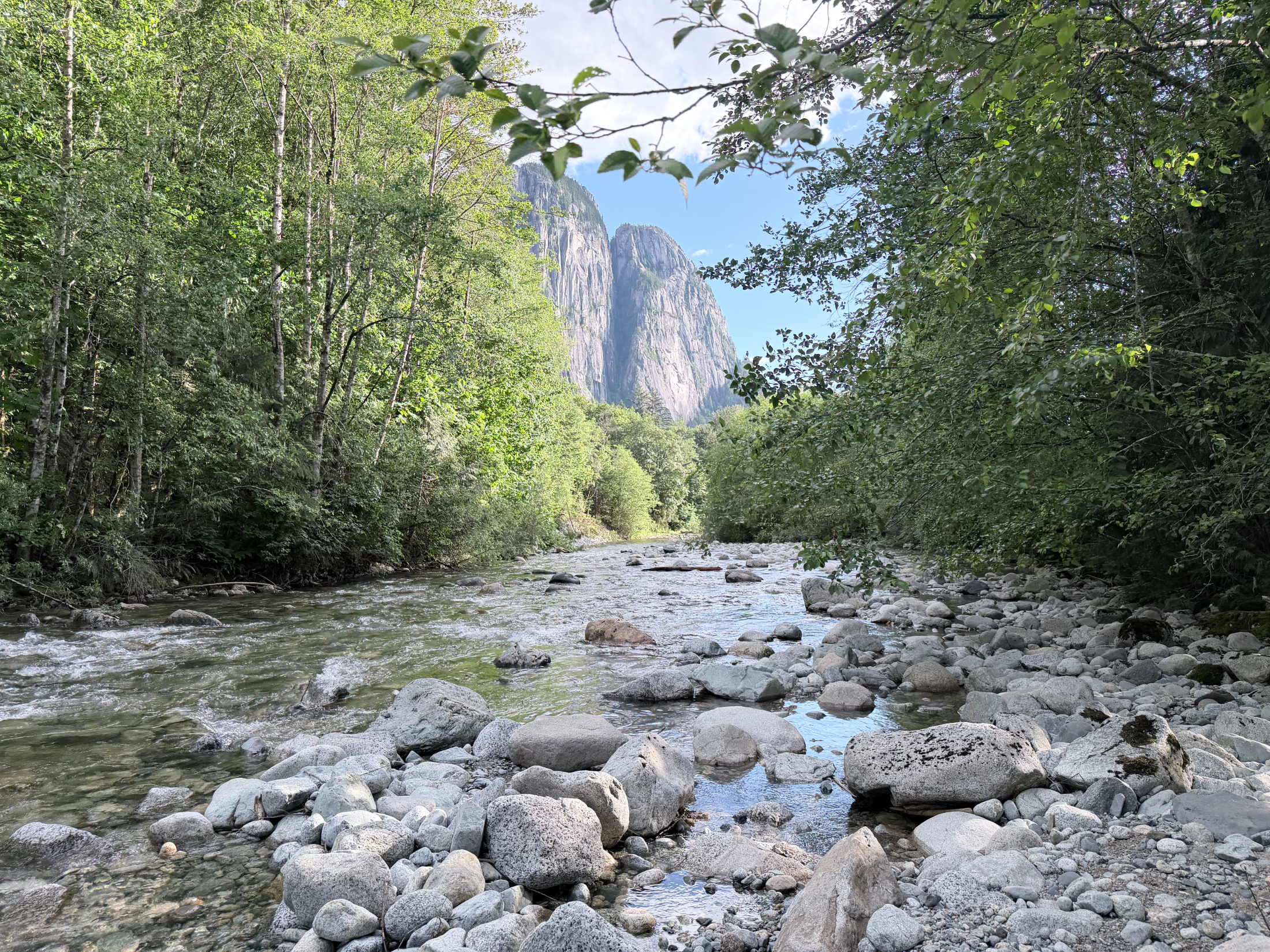
The Outdoor Lifestyle Isn't Just for Weekends
This is something I've talked about before because I think it's one of the biggest things people underestimate before moving here.
People know Squamish is an outdoor community.
What they don't necessarily understand is how the accessibility changes their behaviour.
Mountain biking isn't necessarily something you load onto the back of the car and make a day of.
A hike doesn't necessarily require planning your Saturday around it.
Going outside can become what you do for an hour after work.
That changes your lifestyle.
And depending on what you're interested in, moving from Vancouver to Squamish can actually mean gaining access rather than giving it up.
If mountain biking is a major part of your life, for example, it's difficult to argue that moving to Squamish represents a recreational sacrifice.
There Are Genuine Trade-Offs
Now, having said all of that, there are some areas where Vancouver unquestionably offers more.
One is specialized healthcare.
Squamish has local healthcare services and Squamish General Hospital, but there are types of specialist care for which residents may need to travel elsewhere.
That's a legitimate consideration, particularly if somebody has ongoing medical needs.
Another is major retail shopping.
If shopping is a significant part of your lifestyle and you want a huge selection of fashion, furniture or specialty retailers nearby, Squamish isn't Vancouver.
You'll probably still make trips south.
And then there's one trade-off I understand particularly well from raising my own children here.
Highly Competitive Sports Can Change the Equation
Both of my kids were competitive athletes.
My son played hockey at a level where, at the time, he needed to travel south for the level of competition and development he wanted.
We spent a lot of time going to places like Langley and Delta for hockey.
My daughter was heavily involved with horses. There was riding in Squamish, but the particular level of competitive riding she was pursuing required opportunities elsewhere.
That's a real trade-off.
And it doesn't apply only to sports.
If your child becomes extremely serious about a particular pursuit—whether that's a specific sport, dance, music, arts or some other specialized activity—the depth of coaching, facilities and competition available in a major metropolitan area can be difficult for a town the size of Squamish to reproduce.
But It Depends Completely on the Activity
This is where the comparison gets interesting.
Squamish actually has a substantial local sports community.
There are local organizations for hockey, soccer, swimming, skating, baseball, rugby, field hockey, equestrian activities, BMX and numerous other sports.
For normal participation and even competitive development in some activities, there's plenty happening locally.
But once you're talking about very specialized or elite development, the answer becomes activity-specific.
And in certain outdoor sports, the equation reverses completely.
If your kid becomes obsessed with mountain biking, for example, you're already living in one of the places people travel to in order to ride and train.
So I wouldn't tell a family:
“Your kids can't pursue competitive sports if you move to Squamish.”
That's simply not true.
I'd tell them:
“If your child is already pursuing something at a very high level, investigate what that particular pathway looks like from Squamish before you buy.”
That's useful information to know beforehand.
Squamish Has Culture—Just on a Different Scale
The same thing applies to entertainment and culture.
No, we don't have the Queen Elizabeth Theatre.
We're not going to have Vancouver's quantity of major concerts, theatre productions and exhibitions.
But that doesn't mean nothing happens here.
The Brackendale Art Gallery is a grassroots gallery, concert and gathering space. Squamish has an active arts community with workshops, concerts, exhibitions, markets and other events.
There are community events and performances.
There are clubs and groups.
There are people gathering around music, running, cycling, art and all sorts of other interests.
You sometimes have to investigate a little more to find your community.
But it's here.
What I Think You Actually Give Up
After about 25 years in Squamish, I genuinely have to think pretty hard about what I miss from Vancouver.
Specialized healthcare can require travel.
Major retail shopping can require travel.
Certain elite sports, arts and educational opportunities can require travel.
There are major concerts, performances and events that simply aren't going to come to a town this size.
Those are real differences.
But for most people considering the move, they aren't everyday differences.
They're occasional ones.
And that's important.
Because what you gain from Squamish isn't something you experience once a month.
You experience it every morning when you wake up.
You experience it on the drive home.
You experience it when you walk outside.
You experience it when you decide at five o'clock that you've got an hour to go for a ride.
You experience it raising your kids.
You experience it in the pace of the community.
That's why I struggle with the idea that you're “giving up” Vancouver to live here.
Maybe You're Giving Up Exactly What You Wanted to Leave Behind
If we want to be funny about it, sure.
You're giving up some concrete.
You're giving up some grey.
You're giving up some traffic.
You're giving up some of that push-push-push city mentality.
But if those are precisely the reasons you're thinking about leaving Vancouver, that's not much of a sacrifice.
That's the point of moving.
Squamish isn't Vancouver with better mountain biking.
It's a different way of living.
There are things Vancouver does better, and there probably always will be.
But Squamish has changed enormously during the time I've lived here. Many of the everyday amenities that once represented genuine compromises aren't significant compromises anymore.
So if you're thinking about moving from Vancouver to Squamish, I wouldn't start by asking:
“What am I going to give up?”
I'd ask:
“What do I actually use in Vancouver that I couldn't reasonably get or access from Squamish—and how often do I really use it?”
Then compare that answer with what you'd gain every single day by living here.
For a lot of people considering the move, I think the answer becomes pretty obvious.
 The data relating to real estate on this website comes in part from the MLS® Reciprocity program of either the Greater Vancouver REALTORS® (GVR), the Fraser Valley Real Estate Board (FVREB) or the Chilliwack and District Real Estate Board (CADREB). Real estate listings held by participating real estate firms are marked with the MLS® logo and detailed information about the listing includes the name of the listing agent. This representation is based in whole or part on data generated by either the GVR, the FVREB or the CADREB which assumes no responsibility for its accuracy. The materials contained on this page may not be reproduced without the express written consent of either the GVR, the FVREB or the CADREB.